
The Nexus 2026: Where Employment Law, HR Strategy and the Human Reality of Work Met

Ten Yards Legal brought together HR professionals, employers, business leaders and workplace specialists for The Nexus, a conference designed to challenge the way organisations think about people, performance and legal risk.
But The Nexus was not a conventional employment law conference.
Hosted in a cinema, the event deliberately moved away from the traditional boardroom or hotel conference format. The setting created a more visual, engaging and memorable experience for attendees, with presentations delivered in a space designed for storytelling, focus and interaction. The result was a conference that felt fresh, energetic and distinctly different. There was serious content, practical insight and legal depth, but also a sense of informality and enjoyment. The popcorn helped too.
That choice of venue reflected something larger about Ten Yards Legal’s approach. The firm did not simply organise another professional event. It showed the courage to do something outside the norm, and the innovation to create a setting where employment law, HR strategy, leadership and wellbeing could be explored in a way that felt accessible, human and alive.

Early feedback from attendees reflected that energy. One participant described it as a “brilliant conference from start to finish”, praising the team, the speakers and the overall experience. Another commented that “everything was excellent, from the food and speakers to the organisation.”
As Dr Roselyn Borg, Founder of Ten Yards Legal, put it: “The purpose of The Nexus was never simply to host another employment law conference. We wanted to create a space where HR professionals and employers could confront the real issues affecting workplaces today: performance, absence, accountability, wellbeing and legal risk. The response confirmed what we already believed: Malta needs this conversation, and Ten Yards Legal is proud to be leading it.”
A conference built around the real challenges employers face
The Nexus was conceived around a simple but powerful idea: HR does not exist in isolation because people do not exist in isolation.
Employees bring their ambitions, pressures, health concerns, financial worries, family responsibilities and personal crises into the workplace. Employers, in turn, must manage performance, absence, accountability, compliance, culture and risk in a way that is both commercially effective and legally sound.
This was the thread running through the entire conference.
Rather than treating employment law as a narrow compliance exercise, The Nexus placed it exactly where it belongs: at the centre of organisational decision-making. The discussions moved beyond “what does the law say?” and into the more difficult questions that HR professionals and employers face every day. How do you support someone who genuinely cannot attend work? How do you challenge someone who simply will not? How do you manage underperformance fairly? How do you protect your organisation without losing sight of the human being behind the issue?
Ambition, resilience and the legal hurdles of work

The conference opened with Dr Roselyn Borg’s keynote, “The Architecture of Achievement and Legal Hurdles”, which set the tone for the day.
Drawing on her own professional journey, Dr Borg connected ambition, planning and resilience with the legal realities faced by both employees and employers. Her message was clear: success is not built on ambition alone. It requires structure, courage, decision-making and the ability to navigate legal and human complexity.
Her keynote explored themes of recruitment, constructive dismissal, restraint of trade, discrimination, leadership and measurable HR targets. It also challenged HR professionals to ask for a seat at the strategic table, not after decisions have already been taken, but at the point where vision, planning and risk are being shaped.
That message was particularly important. In modern organisations, HR cannot be treated as a support function that is called in only when something has gone wrong. HR must be part of the strategic conversation from the start.
One attendee captured the atmosphere in the room by saying that Roselyn “captivated the audience from start to finish”.
Absence, accountability and the discipline of documentation
Dr Borg later returned with a focused session on absence management, “The Anatomy of Absence”. This was one of the most practical and direct sessions of the day, addressing a question many employers struggle with: when should absence be supported, and when should it be challenged?
The session drew a careful distinction between employees who cannot attend work and those who choose not to. That distinction matters legally, operationally and morally.
Employers were reminded that genuine sickness, disability and personal crisis require compassion, structure and reasonable adjustment. At the same time, calculated absence, procedural abuse and repeated patterns of avoidance must be managed firmly and fairly.
The key message was simple and memorable:
Support those who cannot. Challenge those who will not. Document everything.
For HR professionals, that sentence captured one of the central lessons of the day. Good intentions are not enough. Employers need policies, records, review meetings, documented decisions and consistent application. Where absence is concerned, documentation is not bureaucracy. It is protection.
Performance must be enabled, not merely reviewed
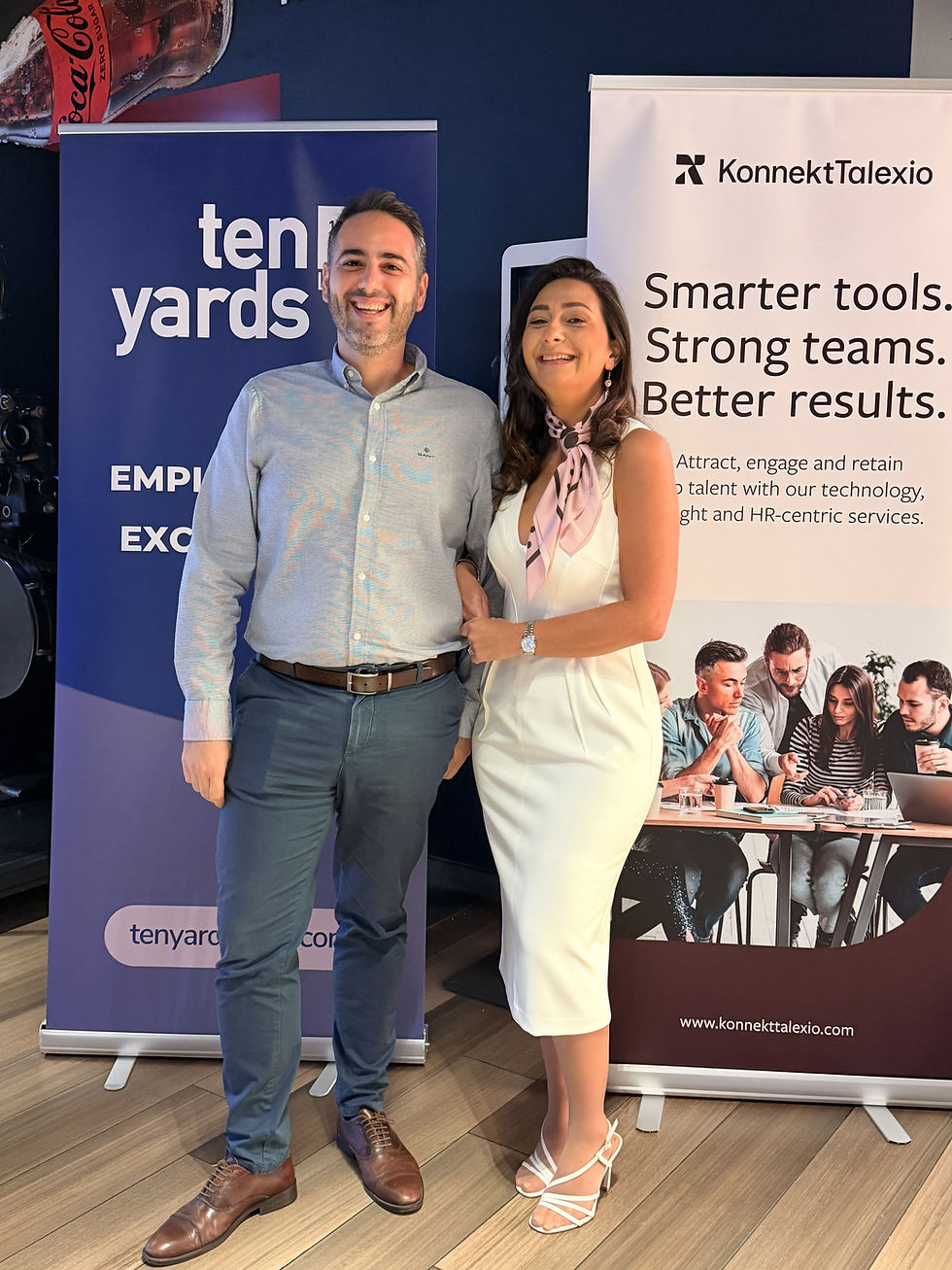
Jonathan Camilleri, Head of HR at KonnektTalexio, then challenged one of the most familiar practices in HR: the annual performance review.
His presentation, “Reimagining Performance: Are Annual Reviews still Relevant?”, asked whether traditional performance management systems actually help people perform better. His answer was clear: performance is not built once a year. It is built through constant feedback, direction and adjustment.
The cinema setting made this message even more effective. Just as a great performance on screen is created through rehearsal, feedback, correction and direction, great workplace performance is built through ongoing clarity and support.
Jonathan contrasted traditional performance management with continuous performance management and then moved towards the idea of performance enablement. This is a more mature model in which employees take ownership of performance, while managers act as coaches who create the right conditions for people to succeed.
His session also carried an important legal and practical warning. While Maltese law does not prescribe a formal performance-review format, employers still need fairness, consistency and documentation. If performance is not captured, it becomes difficult to defend decisions on promotion, reward, discipline or dismissal.
For employers, the message was not to abandon structure. It was to build better structure: clearer goals, better feedback, stronger manager capability and records that reflect reality.
Leadership through connection and accountability

Megan Easey’s session brought the conversation back to leadership behaviour and organisational culture.
Her presentation, “Leadership Through Connection, Accountability and Authenticity”, focused on the basics that are often overlooked. Leaders must create clarity. They must model the behaviour they expect. They must give feedback. They must hold people accountable. Most importantly, they must understand that avoided conversations do not disappear. They become future problems.
One of the strongest messages from the session was that the quality of feedback directly shapes the quality of culture.
That is a lesson every employer should take seriously. Many workplace problems do not begin as legal problems. They begin as conversations that were avoided, expectations that were unclear, or behaviour that was tolerated for too long. By the time the matter reaches HR or legal counsel, the issue has often already become more difficult, more emotional and more expensive to resolve.
Megan’s contribution reinforced one of the wider themes of The Nexus: accountability is not harshness. Properly understood, accountability is a form of clarity. It tells people where they stand, what is expected and how they can grow.
The hidden personal burdens employees bring to work

One of the most distinctive aspects of The Nexus was its willingness to address the hidden pressures that affect workplace behaviour.
Dr Patrick Farrugia’s presentation, “The Invisible Liability: The Family Law Intersection”, examined how family litigation can quietly affect performance, attendance, focus and workplace risk.
Employees going through separation, custody disputes or court proceedings may appear disengaged, distracted, irritable or absent. HR may see the symptom, but not the cause. That distinction matters. Treating every visible decline as a performance issue may lead employers to compound an already fragile situation.

The session also explored practical collision points between family law and HR, including court summonses, protection orders and attachment orders on wages. These are not abstract legal issues. They create real operational, payroll, data protection and workplace safety obligations for employers.
The key lesson was that HR should not become a barrier when employees face legal burdens outside work. Properly handled, HR can become the bridge between legal necessity, business continuity and human support.
Financial wellbeing belongs in the HR conversation
Patrick DeBattista’s session, “The Financial Anchor: Money Management for your Employees”, added another important dimension to the conference: financial wellbeing.
Money affects every employee. Financial stress does not remain at home when someone walks into work. It affects concentration, engagement, decision-making, absence, productivity and mental health.

Patrick’s presentation made the case for financial wellbeing as part of HR strategy, not as a private matter that employers can ignore. His practical approach to money management showed how employees can benefit from clarity, structure and better financial habits.
For employers, the wider lesson was significant. A workplace that supports financial literacy and financial wellbeing is not merely offering a perk. It is helping employees become more stable, more focused and more resilient.
In a conference about performance, absence and accountability, this session completed the picture. People perform best when they are not overwhelmed by hidden pressures, whether those pressures are legal, financial, emotional or personal.
Lessons from the UK and what Malta should watch next

The Nexus also brought an important comparative perspective through Bobby Ahmed of Neathouse Employment Law, who delivered a session on lessons from UK employment law.
His presentation covered pay transparency, equal value claims, investigations, pregnancy and maternity protection, flexible working, tribunal awards and the major reforms introduced by the Employment Rights Act 2025.
For Maltese employers, the value of this session lay in looking ahead. The UK experience shows how quickly employment-law risk can evolve and how expensive poor process can become. Equal pay, investigation failures, pregnancy discrimination and inadequate documentation are not merely legal technicalities. They are boardroom risks.
The session also reinforced a message that had appeared throughout the conference: documentation saves employers. Whether the issue is job evaluation, disciplinary investigation, flexible working, pregnancy protection or dismissal, tribunals decide cases on evidence, not assumptions or good intentions.
Ten Yards Legal at the centre of the conversation
The success of The Nexus lay in the way it connected these topics.
This was not a series of disconnected presentations. It was a single, coherent conversation about the future of work in Malta. It brought together legal analysis, HR practice, leadership insight, financial wellbeing and the lived reality of employees and employers.
That is precisely where Ten Yards Legal is positioning itself: not only as an employment law firm, but as a thought leader helping Maltese employers understand the intersection between law, people and business.
The event demonstrated that employment law advice today cannot be limited to contracts, policies and disputes. Employers need strategic guidance. They need practical tools. They need risk awareness. They need support in building cultures where people can perform, where managers can lead and where legal obligations are properly understood before problems escalate.
The Nexus delivered exactly that.

It gave HR professionals and employers a space to think seriously about the issues shaping their workplaces. It encouraged them to look beyond surface behaviour and ask better questions. It reminded them that performance, absence, wellbeing, leadership and compliance are all connected.
Most of all, it showed that when legal expertise is combined with creativity and courage, even an employment law conference can feel different.
The cinema, the visual experience, the interaction, the practical content and, yes, the popcorn, all helped make the day memorable. But the real success of The Nexus was the quality of the conversation it created.
And if The Nexus proved anything, it is that Ten Yards Legal is not waiting for the future of employment law and HR strategy to arrive.
It is helping to shape it.

Comments